








SustainLab

Solutions

Resources

Company

SustainLab

Solutions

Resources

Company

SustainLab
SustainLab

Solutions

Resources

Company

GHG and climate accounting — measuring Scope 1 2 and 3 emissions with SustainLab

GHG and Climate Accounting

Book demo

GHG and climate accounting — measuring Scope 1 2 and 3 emissions with SustainLab

GHG and Climate Accounting

Book a demo

Collect data and calculate your GHG emissions

The GHG Protocol is the most widely used international standard for calculating a company's greenhouse gas emissions. It splits them into Scope 1 (direct emissions), Scope 2 (purchased energy) and Scope 3 (other emissions in the value chain). SustainLab collects activity data from your sites and suppliers, links it to emission factors and calculates Scope 1, 2 and 3 in the platform.


Every figure stays traceable to its source, emission factor and calculation method. Our sustainability team helps with the judgement calls, such as boundary setting, Scope 3 categories and the choice of emission factors, and documents the reasoning behind each decision.

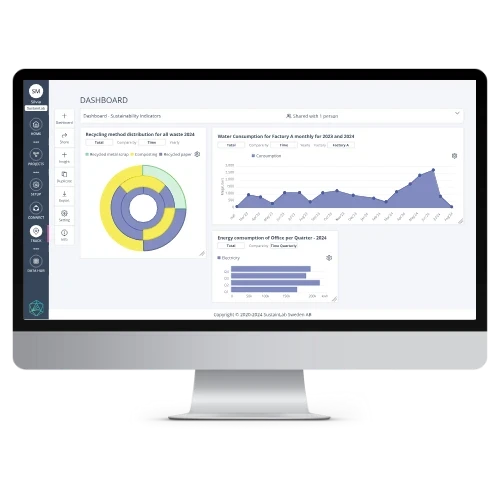
GHG emissions dashboard in SustainLab showing Scope 1 2 and 3 carbon accounting data
  • Areim logo
  • Autocirc logo
  • Blentagruppen logo
  • Delta Nordic logo
  • Fiskarheden logo
  • Gullspång Re:food logo
  • Moment Group logo
  • SCA logo
  • Safe Life logo
"We handle large amounts of data across multiple facilities, and Excel had become both messy and time-consuming. With SustainLab, we finally have all emissions data collected and quality-assured in one place."

Blentagruppen

Built in calculations

Your operational data connects to verified emissions from factors inside the platform.

Scope 1, 2 , and 3 calculations run automatically, results update as new data arrives.

Every number traces back to its source.

KPIs and dashboards give you a live view of your climate performance across the organization.

Added support

The judgement calls handled by people who know GHG.

Everything you need to ensure that your carbon accounting is done correct and smooth.

Boundary setting, Scope 3 categorization, emission factor selection, and all decisions that shape the credibility of your report.

Our sustainability team guides you through each step, documents the reasoning, and keeps your methodology current as standards evolve.

Fact summary: GHG Protocol and scope 1, 2 and 3

Latest update: 4 November 2026

GHG Protocol: a global standard for measuring and reporting greenhouse gas emissions, developed by the World Resources Institute (WRI) and the World Business Council for Sustainable Development (WBCSD).

Scope 1: direct emissions from sources the company owns or controls, such as its own vehicles and boilers.

Scope 2: indirect emissions from purchased electricity, heat, steam and cooling, calculated with a location-based and/or a market-based method.

Scope 3: all other indirect emissions in the value chain, split into 15 upstream and downstream categories.

In reporting: the GHG Protocol is the basis for climate disclosures under ESRS E1 and the EU voluntary standard (VS).

How Our GHG Solution Works: From Data Collection to Calculations to Audit-Ready Output

Your carbon footprint is calculated from your activity and your spend data, and supported with estimates, giving you numbers you can defend to investors, customers, and auditors. Every emission factor, methodology assumption, and calculation boundary is documented, so your report is transparent and audit-ready.

Your data stays comparable year over year, as you replicate your data model and keep track of changes. When your climate ambition grows, toward a larger Scope 3 coverage, SBTi target-setting, or CDP reporting — the foundation is already in place.

We deliver a comprehensive output of your GHG data and calculations in total, or disaggregated on your chosen levels.

01

Credible, defensible numbers calculated from actual operational data and documented at every step.

02

Audit-ready by default , every emission factor, boundary, and methodology assumption on record.

03

Ready for developing when your ambition or needs change, the data infrastructure is already in place.
Scope 1, 2 and 3 Data in One Platform

Collect your underlying data to support your GHG calculations in Scope 1, 2, and 3.

SustainLab adds verified emissions factors, estimations and proxies

Support for full traceability from raw input to calculated result, every number has a documented source, emission factor, and methodology behind it

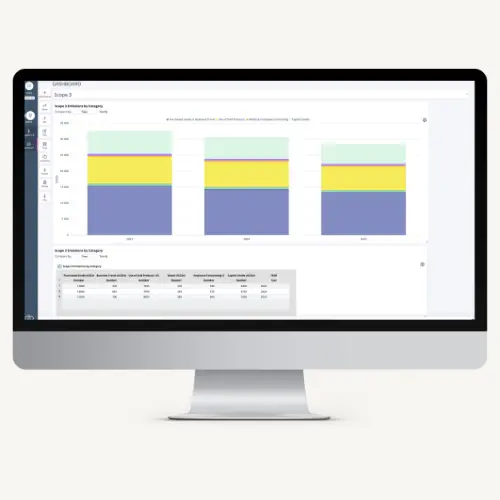
SustainLab climate data platform showing Scope 1 2 and 3 emissions breakdown and GHG Protocol carbon accounting

Combine GHG with our other solutions

Our solutions cover a broad scope of sustainability data and reporting, from GHG calculations and ESRS disclosures to supplier assessments and investor frameworks. Each one combines platform technology with human sustainability expertise, so you get a working setup, not just a tool. Start with what is most relevant today and add more as your obligations and ambitions grow. Read more about each of our solutions below!

ESRS Data Collection and Reporting

Collect the underlying data for your ESRS disclosures, structure it across your organisation, and produce export-ready output for your report.

Read more →

Services

From double materiality assessments and data strategy to decarbonisation planning and disclosure support. Modular sustainability services designed to complement your platform and build your internal capability over time.

Read more →

Custom Frameworks

Build a custom reporting setup for investors, customers or specific frameworks such as SFDR, GRESB, SBTi, CDP. Collect data once, structure once, and use across all your frameworks.

Read more →

Who is this solution for?

Does your emissions reporting need to hold up to investor scrutiny, customer due diligence, or regulatory audit? Are you still running your GHG calculations in spreadsheets, relying on one person who holds all the methodology knowledge, or rebuilding your report from scratch with an external consultant every year?If any of that sounds familiar, this solution is built for you. GHG reporting with SustainLab is the right starting point for any organisation that needs to measure and communicate its climate impact with confidence.

Do you want to know more?

Sustainability reporting is complex, and most organisations are figuring it out while managing everything else at the same time. SustainLab gives you a data-first platform and a team of sustainability experts who work with you from day one — so you get a working setup, not just a tool to figure out on your own. Whether you are just getting started or looking to strengthen what you already have, we will help you find the right solution for where you are right now.

Talk to our team

Get expert guidance tailored to your organisation. Whether you’re starting from scratch or refining your current set-up, we’ll help you navigate requirements, avoid common pitfalls, and move forward with confidence.

Contact us here!

Book a demo

See the platform in action with examples relevant to your industry and reporting situation. A demo gives you a clear picture of what working with SustainLab looks like in practice, with reference to your unique challenges, needs and ambitions.

Book a demo

FAQ: GHG and Climate Accounting

Which carbon calculation standard does SustainLab use?

Our default methodology is the GHG Protocol, the same framework ESRS E1 references directly for greenhouse gas reporting, which keeps your Scope 1, 2, and 3 calculations aligned with CSRD requirements. For clients who need it, we can also calculate under ISO 14064-1, the international standard for organizational GHG quantification and reporting. Let us know your requirement and we configure the calculation accordingly.

What is the difference between spend-based and activity-based carbon accounting?

Spend-based accounting uses financial data (spending amounts) and applies industry emission factors to estimate resulting emissions. Activity-based accounting uses physical data (actual energy consumption, fuel usage, distance traveled) multiplied by specific emission factors. Activity-based is more precise but requires more detailed data. Most mature companies use spend-based for quick estimates and activity-based for high-impact areas.

Why is spend-based carbon data often unreliable?

Spend-based relies on average industry factors that don’t reflect your reality. A company buying renewable electricity pays the same as one buying coal, but emissions differ dramatically. Spend-based hides material differences, creates inconsistency, misses reduction opportunities, and raises regulatory concerns. It’s useful for screening but not for credible reporting.

How long does it take to produce a carbon report in SustainLab’s platform?

The software calculates emissions quickly once data is input, and reports generate in hours. The real timeline depends on data collection. If you have existing data organized, expect 1–2 weeks. If data is scattered, 4–8 weeks. If you’re implementing activity-based accounting for the first time, 8–12 weeks. Our team guides the process, and we’ve helped companies move from spreadsheet chaos to quality first carbon reports in 6–8 weeks.

What emissions should be included in a carbon report?

Scope 1 covers direct emissions from your own operations. Scope 2 covers indirect emissions from purchased electricity, heat and cooling, reported both location-based and market-based. Scope 3 covers emissions in your value chain, such as purchased goods, capital goods, business travel, commuting, waste and the use of sold products. Companies reporting under ESRS follow ESRS E1, which asks for all three scopes when climate is a material topic; which Scope 3 categories you include depends on where your emissions actually are. Transition reliefs exist for the first reporting years, and we go through what applies to you during setup.

How does SustainLab help with data collection for carbon reporting?

We give you one place to centralize emissions data from all sources: facilities, suppliers, logistics, and procurement. You can set up automations to pull energy consumption directly from meters or building systems, collect supplier data through templates, or upload files. Our platform validates data quality, flags inconsistencies, and maintains audit trails.

How often do you update your emission factors?

We maintain a library of verified emission factors based on the latest GHG Protocol methodology, IVL Swedish Environmental Research Institute databases, and Defra guidance. We update regularly as new data becomes available and methodologies evolve. You can also input custom factors specific to your operations.

Can SustainLab help with decarbonization strategy and reduction planning?

Yes, through our Sustainability Strategy Services. Beyond calculating emissions, we help identify high-impact reduction areas, set science-based targets, plan transition pathways, and monitor progress. This bridges the gap between measurement and real change.

What emission factor data sources does SustainLab use?

We use verified, industry-standard sources: GHG Protocol methodology, IVL Swedish Environmental Research Institute databases, Defra guidance (UK), and sector-specific emission factors. Factors are updated annually as new data becomes available. You can also upload custom emission factors specific to your suppliers or operations.

Can SustainLab calculate Scope 3 emissions automatically?

Scope 3 calculation requires supplier engagement and data collection since it’s highly specific to your supply chain. SustainLab provides tools to make supplier data collection easier, including templates, portals, and reminders, but the data input comes from your supply chain partners. We then calculate and aggregate Scope 3 using your data and standard methodologies.

Does SustainLab support Science Based Targets (SBTi) alignment and target-setting?

Yes, through our Sustainability Strategy Services. Validation of targets is SBTi’s own process, but our consultants are familiar with SBTi’s criteria and guide you through preparing a submission that meets those requirements. The platform tracks progress toward your targets year over year.

How does SustainLab handle uncertainty and data quality in emissions calculations?

We track data quality through a confidence and certainty system. Measured data, such as actual energy bills and meters, is flagged as high confidence, while estimated or default data is marked as lower confidence. This transparency helps auditors and stakeholders understand your data reliability. We also flag when data quality improvements are needed.

  • Areim logo
  • Autocirc logo
  • Blentagruppen logo
  • Delta Nordic logo
  • Fiskarheden logo
  • Gullspång Re:food logo
  • Moment Group logo
  • SCA logo
  • Safe Life logo

Let's accelerate change for better business - better planet!

Let's accelerate change for better business - better planet!

Let's accelerate change for better business - better planet!

Forest reflected in a calm lake
SustainLab

SustainLab is a SaaS ESG platform that helps companies collect, structure and report sustainability data across CSRD, ESRS, VSME and GHG Protocol and more, to support better decisions and accelerate meaningful change.

Newsletter

Copyright @2020-2026 SustainLab Sweden AB.

Collect data and calculate your GHG emissions

The GHG Protocol is the most widely used international standard for calculating a company's greenhouse gas emissions. It splits them into Scope 1 (direct emissions), Scope 2 (purchased energy) and Scope 3 (other emissions in the value chain). SustainLab collects activity data from your sites and suppliers, links it to emission factors and calculates Scope 1, 2 and 3 in the platform.


Every figure stays traceable to its source, emission factor and calculation method. Our sustainability team helps with the judgement calls, such as boundary setting, Scope 3 categories and the choice of emission factors, and documents the reasoning behind each decision.

GHG emissions dashboard in SustainLab showing Scope 1 2 and 3 carbon accounting data

Built in calculations

Your operational data connects to verified emissions from factors inside the platform.

Scope 1, 2 , and 3 calculations run automatically, results update as new data arrives.

Every number traces back to its source.

KPIs and dashboards give you a live view of your climate performance across the organization.

Added support

The judgement calls handled by people who know GHG.

Everything you need to ensure that your carbon accounting is done correct and smooth.

Boundary setting, Scope 3 categorization, emission factor selection, and all decisions that shape the credibility of your report.

Our sustainability team guides you through each step, documents the reasoning, and keeps your methodology current as standards evolve.

Scope 1, 2 and 3 Data in One Platform

Collect your underlying data to support your GHG calculations in Scope 1, 2, and 3.

SustainLab adds verified emissions factors, estimations and proxies

Support for full traceability from raw input to calculated result, every number has a documented source, emission factor, and methodology behind it

SustainLab climate data platform showing Scope 1 2 and 3 emissions breakdown and GHG Protocol carbon accounting

Collect data and calculate your GHG emissions

The GHG Protocol is the most widely used international standard for calculating a company's greenhouse gas emissions. It splits them into Scope 1 (direct emissions), Scope 2 (purchased energy) and Scope 3 (other emissions in the value chain). SustainLab collects activity data from your sites and suppliers, links it to emission factors and calculates Scope 1, 2 and 3 in the platform.


Every figure stays traceable to its source, emission factor and calculation method. Our sustainability team helps with the judgement calls, such as boundary setting, Scope 3 categories and the choice of emission factors, and documents the reasoning behind each decision.

GHG emissions dashboard in SustainLab showing Scope 1 2 and 3 carbon accounting data

Scope 1, 2 and 3 Data in One Platform

Collect your underlying data to support your GHG calculations in Scope 1, 2, and 3.

SustainLab adds verified emissions factors, estimations and proxies

Support for full traceability from raw input to calculated result, every number has a documented source, emission factor, and methodology behind it

SustainLab climate data platform showing Scope 1 2 and 3 emissions breakdown and GHG Protocol carbon accounting

Combine GHG with our other solutions

Our solutions cover a broad scope of sustainability data and reporting, from GHG calculations and ESRS disclosures to supplier assessments and investor frameworks. Each one combines platform technology with human sustainability expertise, so you get a working setup, not just a tool. Start with what is most relevant today and add more as your obligations and ambitions grow. Read more about each of our solutions below!

ESRS Data Collection and Reporting

Collect the underlying data for your ESRS disclosures, structure it across your organisation, and produce export-ready output for your report.

Read more →

Services

From double materiality assessments and data strategy to decarbonisation planning and disclosure support. Modular sustainability services designed to complement your platform and build your internal capability over time.

Read more →

Custom Frameworks

Build a custom reporting setup for investors, customers or specific frameworks such as SFDR, GRESB, SBTi, CDP. Collect data once, structure once, and use across all your frameworks.

Read more →